Firstly, a final reminder to register for our webinar on the impacts of a nuclear strike on Faslane, taking place next Thursday 23rd July at 7pm. This comes while the UK government announces a gargantuan bill of £15bn for upgrading this same base.
Our webinar next week will remind us that these nuclear facilities on Scotland’s west coast would be primary targets in a nuclear escalation, and that the humanitarian and environmental consequences of an attack on them would be calamitous.
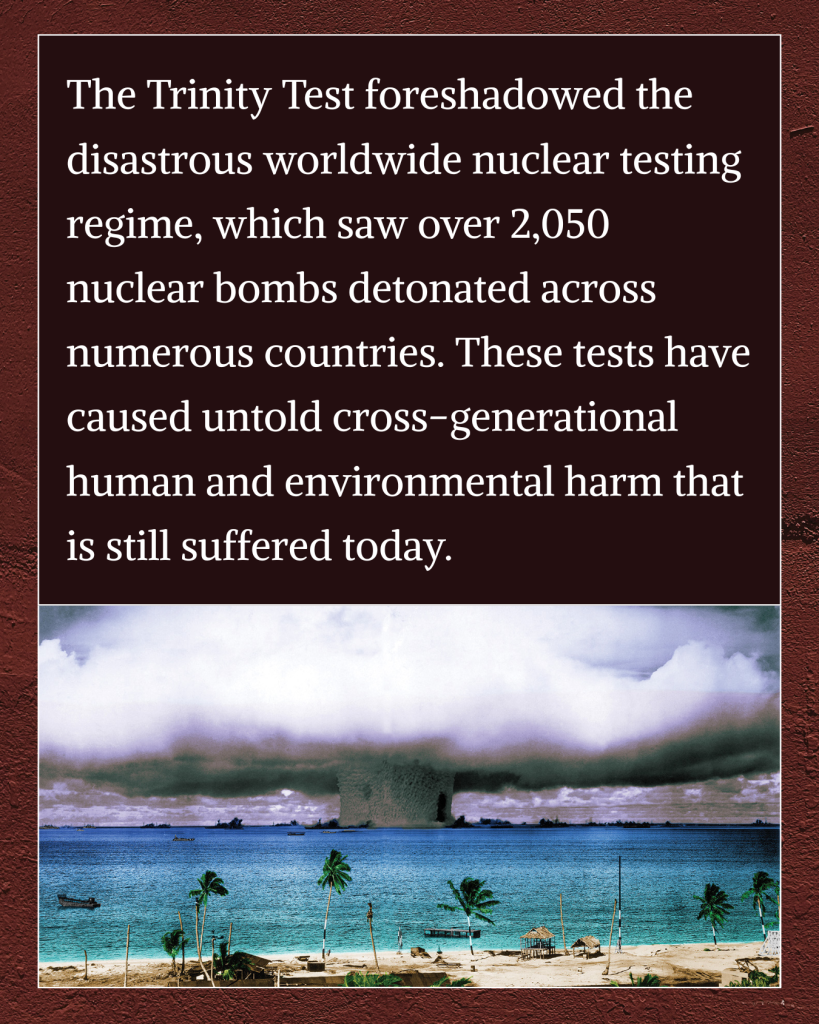
Much of the evidence about the impact of nuclear weapons has been gleaned from what we know about the over 2050 test explosions conducted worldwide by nuclear-armed states during the nuclear age.
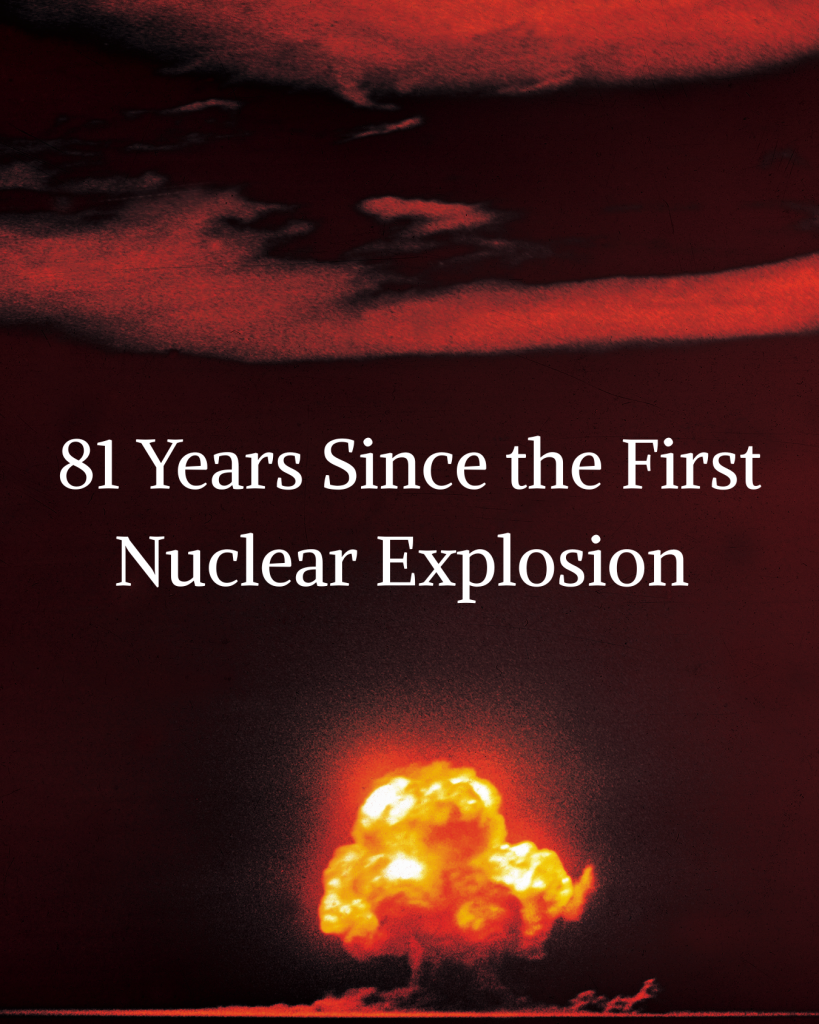
The first of these, the Trinity Test, took place on 16th July 1945 in New Mexico. Much like in the other regions of the world subjected to nuclear explosions, the communities impacted by Trinity continue to seek justice, generations later.
Known as ‘downwinders,’ people across the US southwest and beyond have suffered from increased rates of radiation-sensitive cancers and other diseases. This is almost certainly a result of fallout from Trinity and the many other nuclear tests conducted across the southern US.
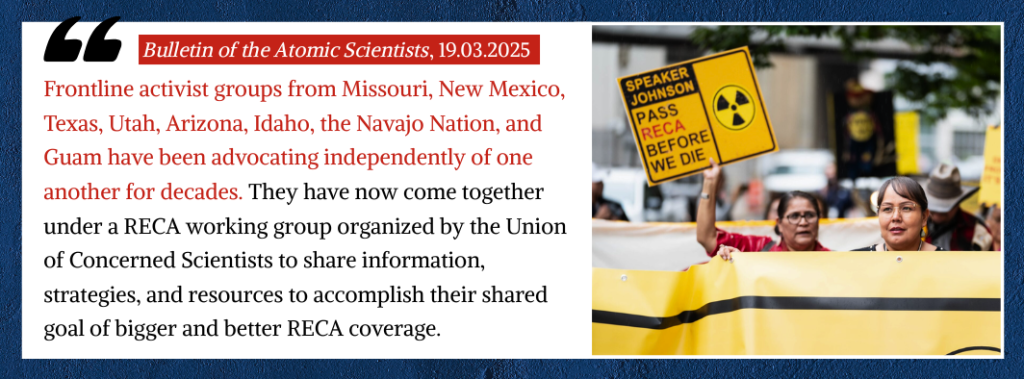
But the 1990 Radiation Exposure Compensation Act (RECA) passed by the US government was restrictive in its eligibility criteria. Even residents of New Mexico, where the first test explosion took place, were excluded. For decades, campaigners have been struggling to expand compensation eligibility to more states almost certainly affected by nuclear test fallout.
Supported by frontline downwinder activists, a 2025 bill expanded eligibility for compensation to residents of New Mexico for the first time as well as other additional states, and postponed the deadline for application.
The struggle of US downwinders for recognition and recompense is not unique. It is shared by the millions affected by nuclear test explosions across the world, predominantly indigenous peoples but also including British citizens.
Impacted communities are at the core of the UN’s Treaty on the Prohibition of Nuclear Weapons, a core pillar of which is working towards their material remediation.
As nuclear-armed states turn yet again towards these abominable weapons, and away from their international obligations, remembering the great harm the nuclear regime has caused over the past 81 years remains key in pursuing the cause of disarmament.