
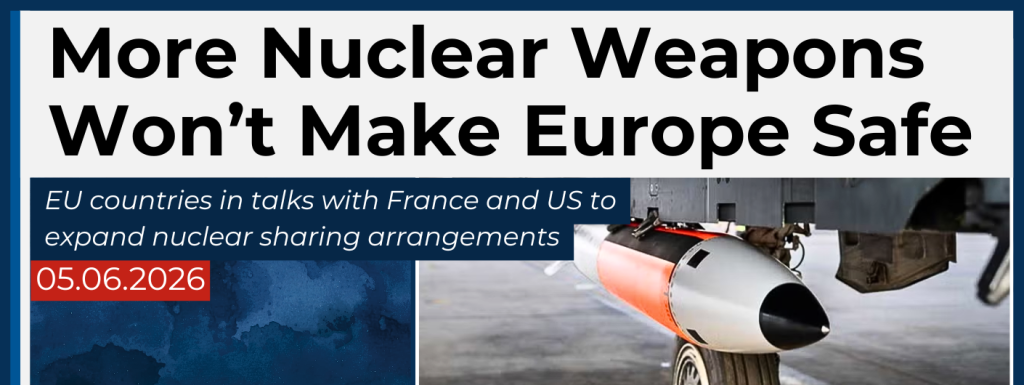
This week there were reports that nuclear proliferation in Europe is advancing along two tracks.
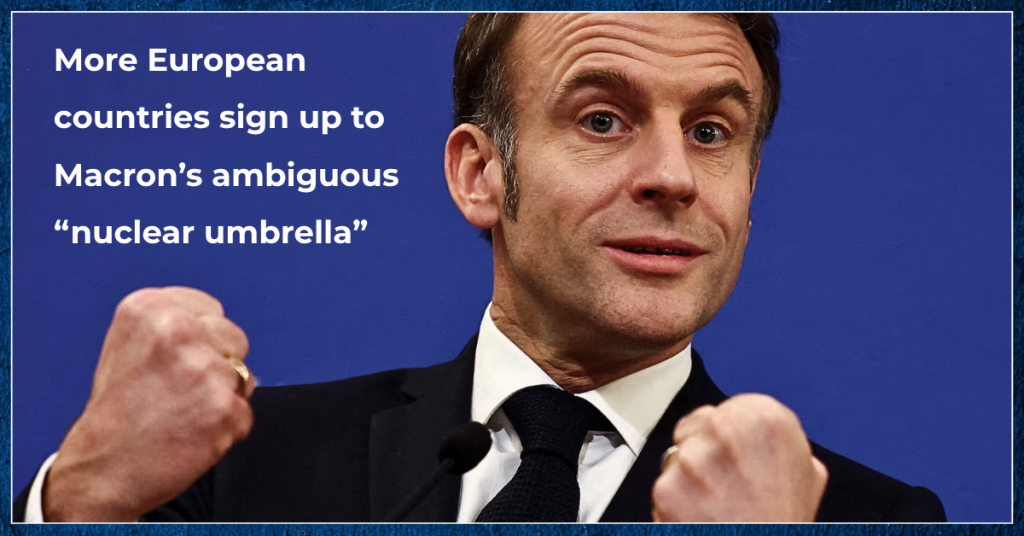
On one track, more countries are registering interest in French President Macron’s nebulous proposal to offer French nuclear weapons to European allies.
This plan was announced by Macron earlier this year, in a drastic change in French nuclear doctrine, which has traditionally deployed nuclear weapons exclusively for France’s “national interest”.
But there is still very little understanding about how exactly these nuclear weapons would be deployed across the continent in a prospective nuclear-sharing arrangement. So far it is only known that France will retain full control over the use of the weapons.
Macron got the support of Norway’s premier during a state visit, and soon after Finland’s Prime Minister also said he was keen to participate in the French nuclear sharing plan.
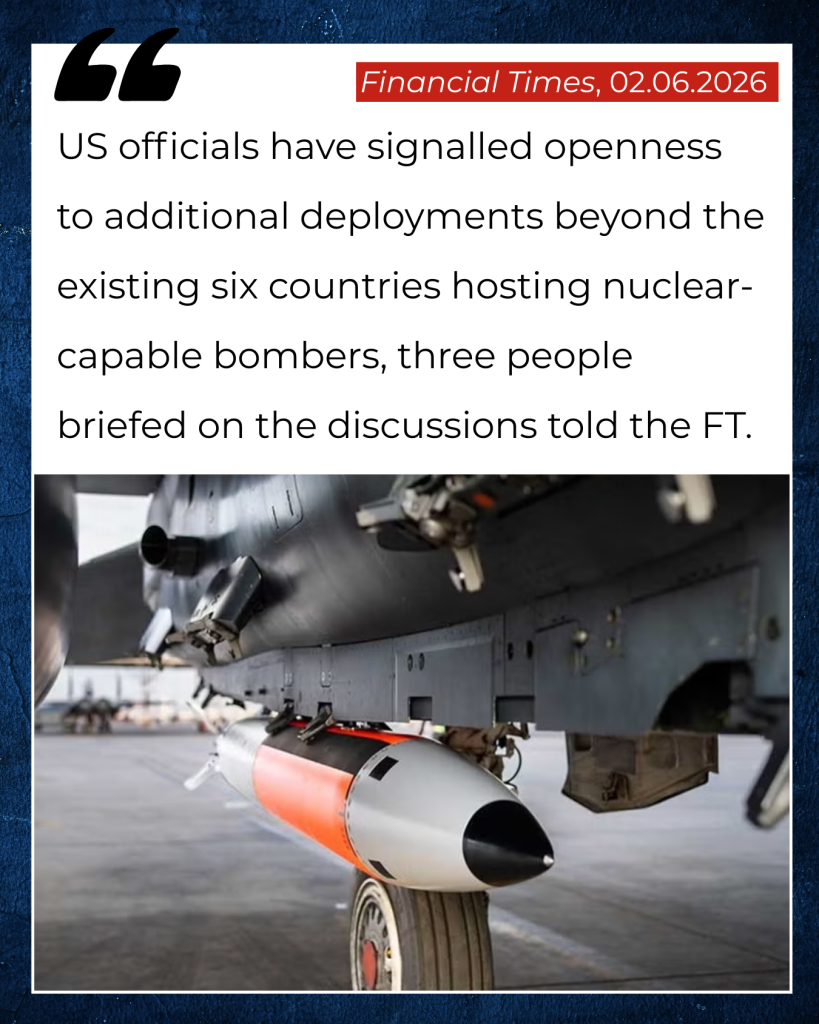
On the other track, a report in the Financial Times indicated that the US was in confidential talks with some European countries to expand NATO nuclear sharing.
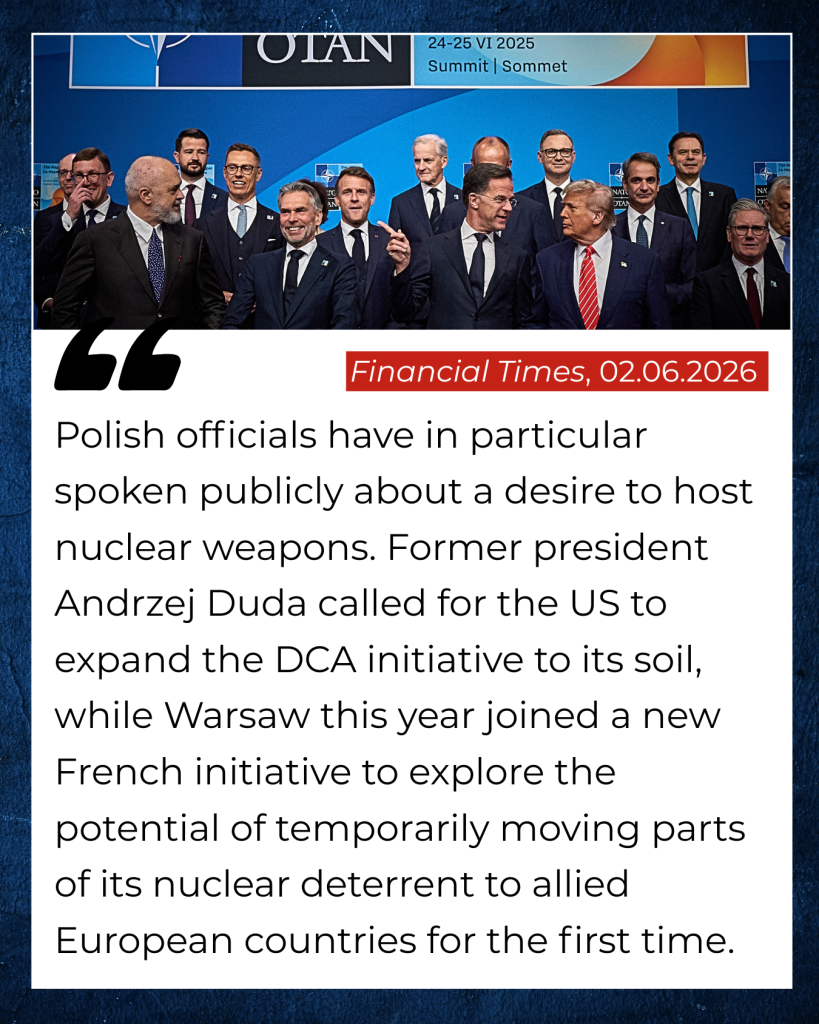
Currently, Belgium, Germany, Italy, the Netherlands, Turkey and the UK host US nuclear weapons under NATO nuclear-sharing arrangements. However, Poland and other Baltic states that have recently expressed interest in hosting US nuclear bombs.
NATO nuclear sharing involves host countries training their air forces to fly US “Dual-Capable” fighter jets which can carry US nuclear bombs strictly under US launch authority.
All these proposals and developments remain highly undefined, and vital questions and doubts about nuclear sharing or so-called “extended deterrence” remain inadequately addressed.
There is the “credibility” doubt as to why the US would risk nuclear war by authorising a nuclear strike to defend another country. Then there is the long-standing question of whether nuclear sharing is compatible with the Non-Proliferation Treaty commitments of nuclear states.
More importantly, the risks of escalations and accidents which might emerge from expanding the frontiers of nuclear conflict in Europe are enormous. There is precedent showing that increased US nuclear presence in Europe can raise nuclear tensions dramatically.
In the “Euromissile” crisis of the late 1970s and 1980s, the deployment of US nuclear-capable missiles in Europe in response to a corresponding buildup in the Warsaw pact countries led to a major nuclear standoff. During this period, the Able Archer NATO exercises in 1983 were interpreted as preparations for a first-strike and Soviet nuclear forces were placed on high alert.
This shows that nuclear build-up and posturing creates risks that are impossible to calculate or predict. We know that “deterrence” is a house of cards that can collapse with the most catastrophic outcomes.
That’s why all nuclear-buildups and proliferation must be opposed across Europe. Another good reason to attend the historic international anti-war conference in London on June 20th, and build the civic movement against the continental war-drive.