Before you read on, a brief reminder of some imminent campaign events:
- Reclaim Our Clyde & Scottish Trade Union Network Scottish Election & TPNW anniversary event (Saturday 24th January 2:30pm-4:30pm, Donald Dewar Statue, Buchanan Street Steps) – all invited!
- Scottish CND Burns Poetry Afternoon (Sunday 25th January from 3pm-5pm online, free registration here).
- Scottish CND Four Years of War in Ukraine Webinar (Tuesday 24th February 7pm-8pm, online, free registration here).
- Scottish CND 2026 Faslane Demonstration (Saturday 14th March, 1pm-3pm, HMNB Clyde North Gate, all welcome and more information to come).
- Scottish CND 2026 Election Hustings (Thursday 26th March, 7pm, Edinburgh Quaker Meeting House, more information to come).

In a way it’s not news, since we all already knew it. But Keir Starmer’s statement on Monday this week was groundbreaking in providing official confirmation that the UK’s nuclear weapons system is strictly dependent on maintaining good relations with the United States.
Well of course it is, since the Trident missile, the UK’s sole delivery system for its nuclear warheads, is a US technology built in California by Lockheed Martin, and stockpiled and serviced by the US Navy in Georgia (John Ainslie & Dan Plesch 2016).
That means the UK must stay in the good books of the US or risk it’s so coveted (though ultimately pointless) nuclear-armed status.
For something that campaigners have been emphasising for decades, and receiving unwarranted derision for, to be confirmed on national television by the UK Prime Minister was a somewhat extraordinary moment.
He was indeed very categorical, as you can hear from his statement from 16:05 in the video below:
It is particularly telling that Starmer does not employ the “independent” adjective in this press conference statement, during which he revealed that the UK would not take any meaningful action to resist the US president’s threats to conquer Greenland.
Instead, his answers served only to reinforce and emphasise the supposed supreme importance of UK-US intimacy on issues of defence, nuclear and intelligence.
This serves as an exemplary reminder of why exactly US ownership of Trident has always been a massive national security liability.
It is not a question of “who fires” Trident (since once it is fired, ‘national security’ goes out the window entirely). Instead, a far greater problem is that nuclear dependence on the US has curtailed British foreign policy for decades.
The “nuclear need” to stay in Washington’s good books is part of the reason for the UK’s deep involvements in the disastrous catalogue of US foreign policy misadventures – from Iraq and Afghanistan to Palestine.
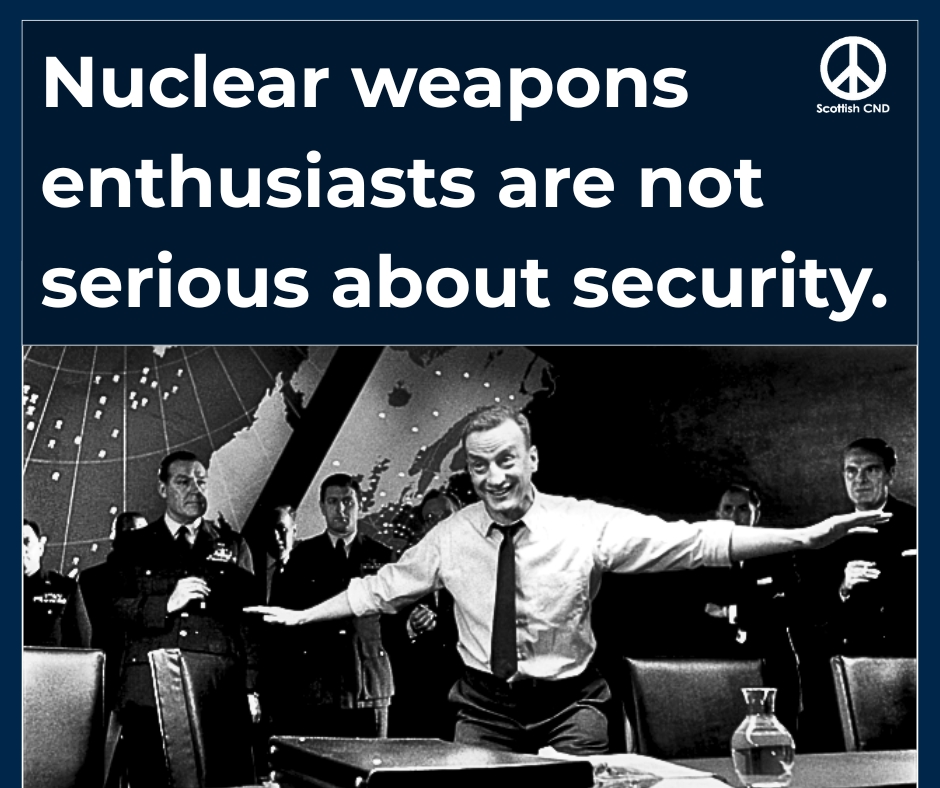
That is a national security liability that Trident enthusiasts have never taken seriously, which should tell us how much they really care about sovereignty, or keeping us safe.
But the correct response to this nuclear subservience is not, as some will argue, to advocate for a ‘truly independent’ nuclear weapon, since threatening nuclear omnicide is a deranged approach to security as such.
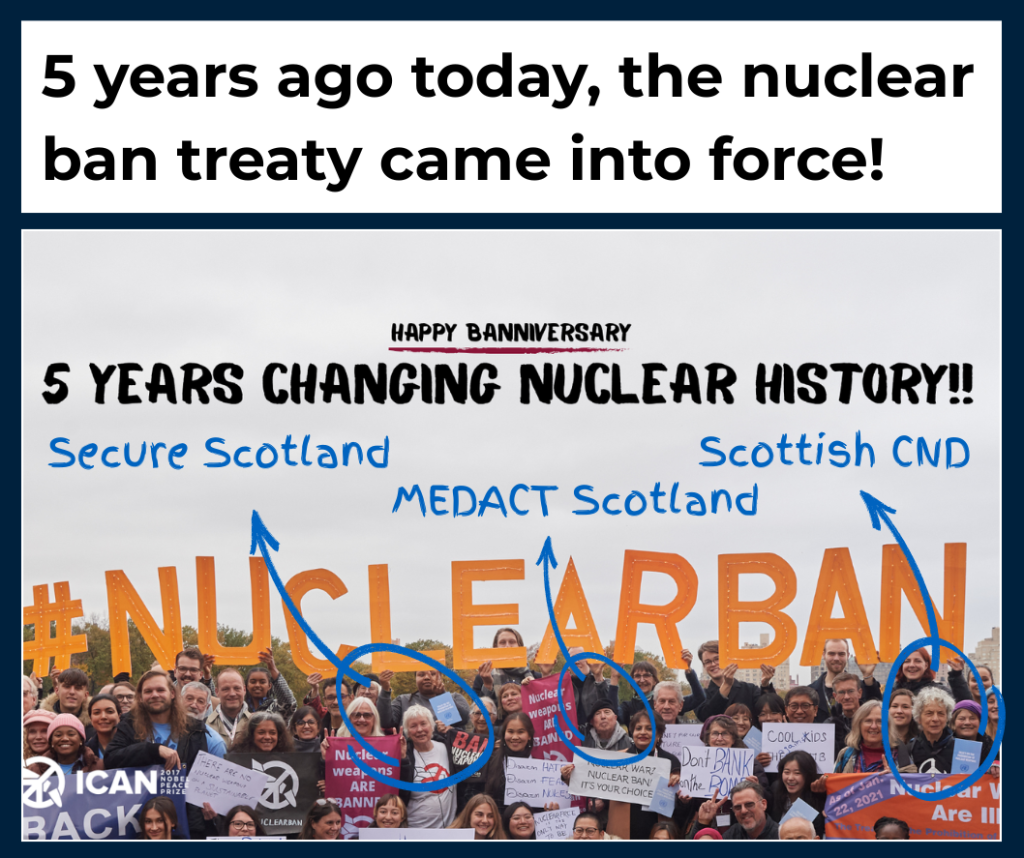
Instead, the UK would benefit enormously from buying into and strengthening the existing international frameworks of nuclear arms control, inspection and verification, including the Treaty on the Prohibition of Nuclear Weapons which reached its 5-year anniversary in force this week.
“Independent” or otherwise, nuclear weapons are not the answer. It is time for world leaders to take security seriously, for once, and come to the table again on nuclear arms control.
In peace,
Scottish Campaign for Nuclear Disarmament
Samuel Rafanell-Williams
SCND Campaigns & Communications Officer